Scaling the UX Research and Design Function
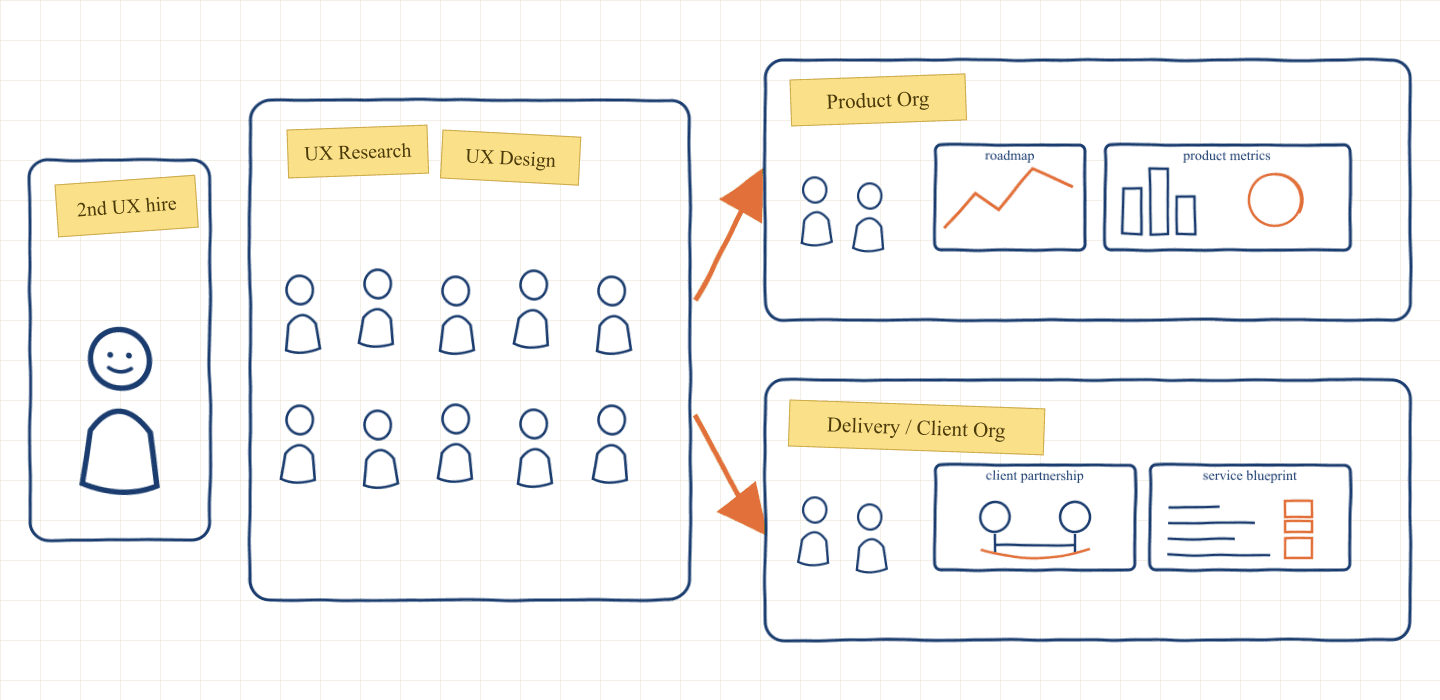
How I scaled UX from a 2-person to a 10-person research and design team, established foundational playbooks and processes, and transformed UX from a perceived afterthought into a strategic business driver across delivery and product teams.
- Team
- UX Lead (Transitioned from UX Designer on internal products), 10 UX Designers & Researchers (hired over period), Product, Engineering, Client Success teams
- Methods
- Immersive research, Stakeholder interviews, Team hiring and development, Process design and documentation, Change management and education
- Timeline
- 3+ years
Overview
When I joined Terakeet's delivery organization, UX was nearly invisible. We were a successful SEO-first agency, but design and research were afterthoughts. Within my first year I showcased the value of UX research and design across the internal product team. Within 2 years I brought UX to our delivery organization. Within 3, I hired 10 designers and researchers, created a foundational UXR playbook, mentored 7 team members from junior to senior levels, and helped scale 4 Fortune 500 accounts from little to no UX to a full roadmap of research and design work.
- UX Designers & Researchers Hired
- 10UX Designers & Researchers Hired
- Growth client accounts with UX roadmaps
- 75%Growth client accounts with UX roadmaps
The Problem
Terakeet was traditionally an SEO-first company. The delivery teams had strong technical and strategic capabilities but were skeptical of design and research. UX was seen as something that slowed down projects or made things 'pretty'. Our teams believed optimizing for keywords alone would help us meet client KPIs and while it did help drive traffic, we were missing opportunities to drive conversions.
The core issue was education. Employees didn't understand what UX research could reveal, what types of insights were possible, or how those insights could directly impact client KPIs like lead generation, conversion, and search rankings. Sales couldn't pitch UX services confidently, PMs didn't know how to integrate UX into roadmaps, and content and SEO teams didn't know how to collaborate with us.
The Journey: Immersion, Hiring, and Education
Phase 1: Deep Immersion and Discovery
I started by diving into the problem. I attended every client meeting I could, standups, strategy sessions, retrospectives, roadmap planning. I scheduled one-on-one conversations with team members across the organization to better understand their day-to-day work and how it ladders up into the larger strategy for the client.
These conversations had two purposes. First, I was genuinely trying to understand how the content and SEO teams currently work and where UX could integrate, support, and enhance their deliverables. Second, I was educating. I spent time explaining what UX research and design actually is, sharing example outputs, and providing ideas of how we can work together.
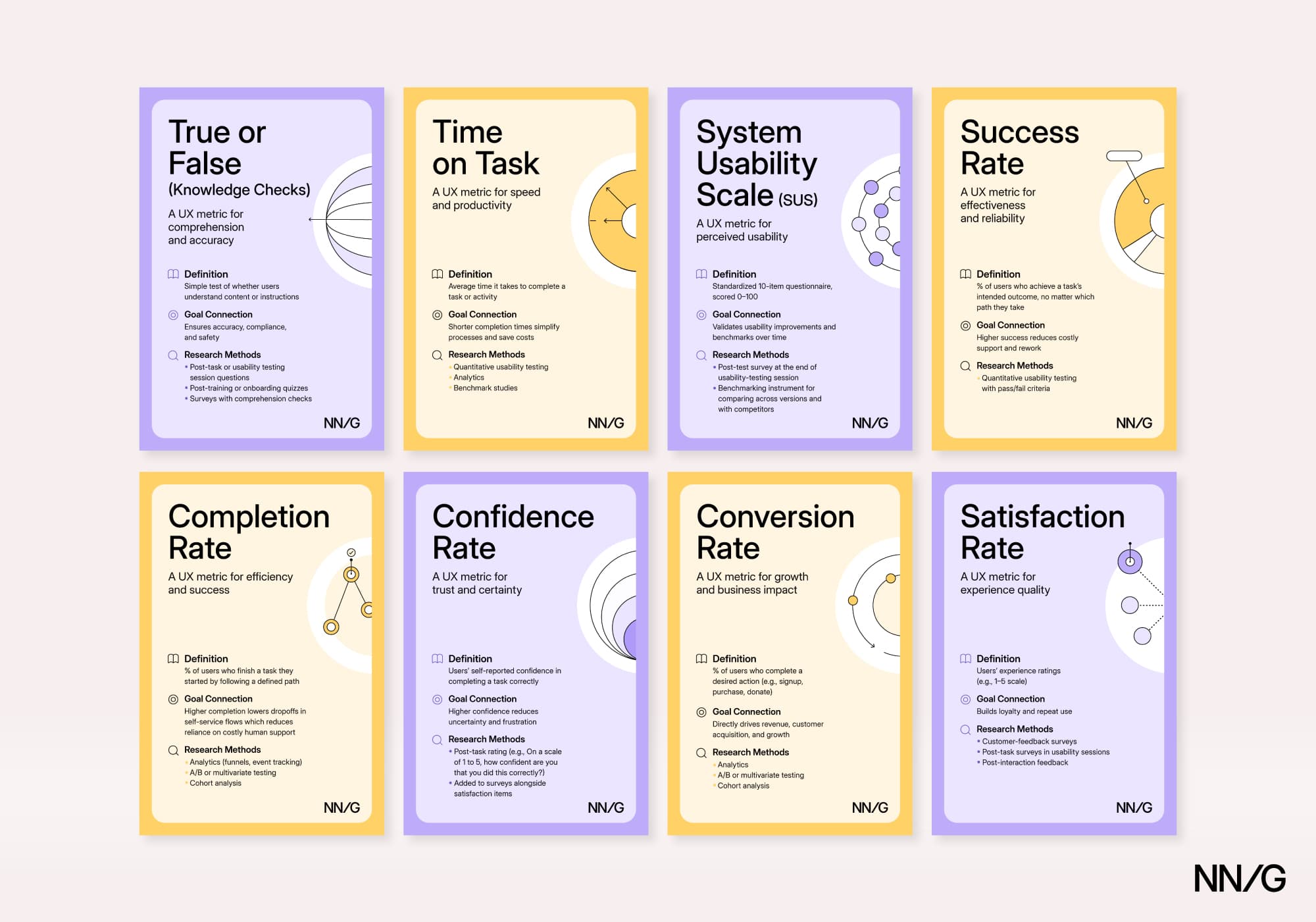
I also read about UX metrics, specifically the Nielsen Norman Group research on ROI of UX, to brainstorm how we could measure success on client accounts and advocate for more UX work.
Phase 2: Pilot and Proof of Concept
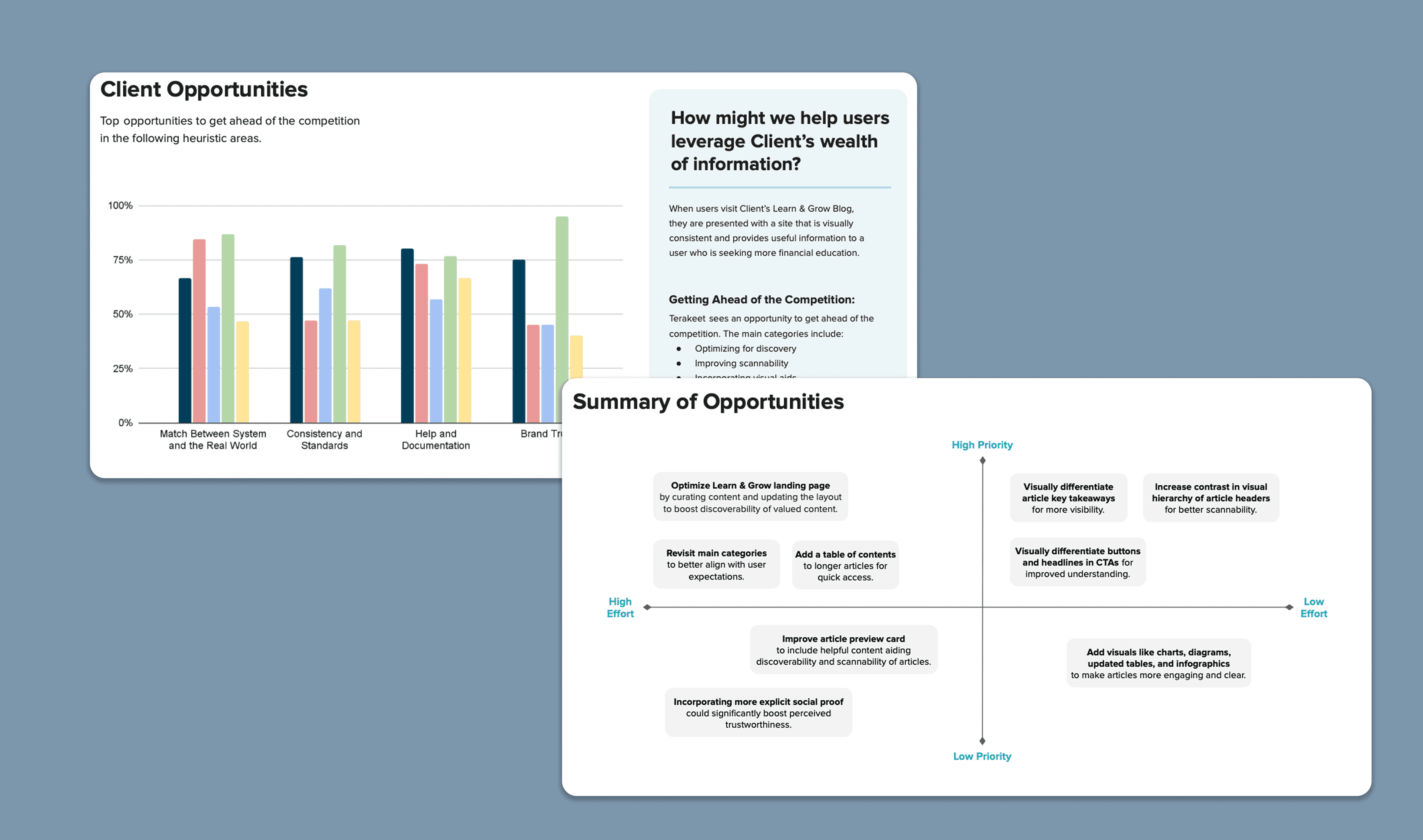
Rather than roll out a process across all accounts at once, I picked one client to pilot with. We started with competitive benchmarking and heuristic evaluation: foundational UX work that we could do on a budget and would serve as a benchmark for measuring success.
On that first account, I learned something crucial: each client had different maturity levels, different needs, and different appetites for UX work. Some wanted A/B testing and CRO-focused work. Others wanted foundational research to understand their users better. Some clients had their own UX teams and wanted us to play a supporting role; others had zero UX capability and were looking for us to lead.
Phase 3: Building Playbooks and Processes
Once the pilot proved value, we focused on building systems that would let us scale research across multiple accounts with consistent quality. At the same time, we started growing the team and documenting the Terakeet way of doing research so new hires could ramp up quickly. Process and hiring evolved together in an iterative loop, with each new team member helping refine how we worked and what we documented.
- UX Research Playbook for Delivery. A comprehensive guide to research methodologies, best practices, ethical considerations, and the tools we use.
- Research Process Deck. A 3 phase process framework (Prepare, Conduct, Analyze and Deliver) that guides teams from problem statement through findings delivery.
- UX and CRO Playbook. An explanation of how UX research and design directly impact conversion rate optimization and client KPIs.
- Hiring framework. Role descriptions, interview guides, and evaluation rubrics so every hiring decision was consistent and objective.
The Results
Hiring Process & Evaluation
Developed job descriptions, evaluation rubric, and a rigorous interview process that removed bias and enabled consistent, high-quality hiring across 10 designers and researchers.
Research Methods Playbook
Created a living document standardizing our UX research methods and process, allowing teams to maintain quality across client engagements while retaining flexibility for unique client needs.
UX/CRO Playbook
Demonstrated how user research directly drives conversions, lead generation, and traffic—reframing CRO not as separate from UX, but as an application of UX research principles.
Assessment Integration
Integrated heuristic evaluation and competitive benchmarking into the first phase of all growth client accounts, helping us discover appetite for UX and identify the biggest opportunities.
Financial Services Growth
Scaled a Fortune 500 financial services client from zero UX work to 4 generative research studies per year, driving improvements to product pages and leading to contract expansion.
Healthcare Partnership
Integrated our UX team into a Fortune 500 health insurance client's product agile sprints, delivering collaborative design and research on complex components and navigation patterns.
Reflections

Shifting the direction of an established, SEO-led organization is less like turning a moving ship: it requires time, persistence, and coordinated effort across many parts of the system. Change doesn't happen through a single initiative or mandate. It's built through consistent, visible success across multiple pilots, and even then, adoption unfolds gradually.
Integrating UX into existing workflows depends as much on relationships as it does on process. Earning trust across teams, SEO, content, sales, and client stakeholders, was essential. The most successful engagements weren't those where UX operated in isolation, but where it was deeply embedded within cross-functional teams.
Meaningful change came from incremental shifts, grounded in clear measurement and tangible impact. Demonstrating value in small, repeatable ways helped build momentum. Over time, client enthusiasm became a powerful driver. When stakeholders saw the impact of UX firsthand, they advocated for more, expanding its presence across roadmaps and into other accounts which ultimately made UX adoption more sustainable and scalable.